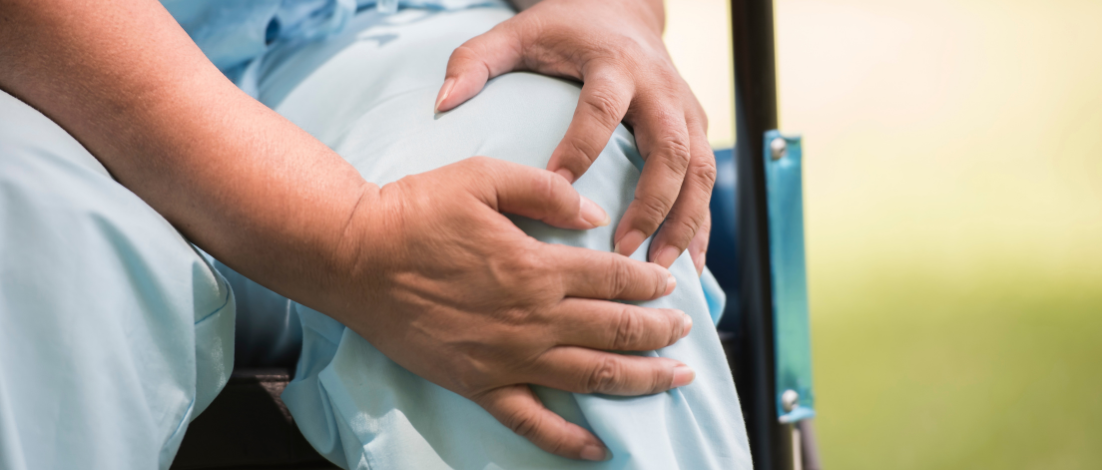
Knee pain is one of the most common musculoskeletal complaints seen in healthcare. More than 1 in 5 U.S. adults live with chronic pain, according to the CDC, and joint conditions are among the leading contributors. For many people, knee pain affects walking, climbing stairs, standing for long periods, or completing everyday tasks.
Because pain is both a personal experience and a physical condition, providers use specific tools to track it “objectively” over time.
They often ask you to rate your pain on a 0 to 10 pain scale, where 0 is no pain and 10 is the worst pain possible.
Doctors will also write down whether your pain is intermittent (comes and goes) or constant (lasts all day without stopping). Sharing these descriptive words helps ensure your charts match your actual physical experience.
Why Do Providers Separate Your Medical Records?
When you read a doctor’s note after an appointment for knee pain, you will see that the information is split into distinct sections.
Healthcare providers routinely combine your personal history with physical exam findings because neither piece alone tells the complete clinical story. Together, they help guide treatment decisions, track healing, and create a reliable history for your benefits pursuit.
To keep these records organized, doctors almost always use a standard framework called a SOAP note. This format splits your visit into four parts:
- S – Subjective: What the patient reports about their symptoms and pain.
- O – Objective: Measurable examination findings gathered by the clinician.
- A – Assessment: The clinician’s medical impression or diagnosis of the condition.
- P – Plan: The treatment recommendations, such as physical therapy or medication.
Understanding this format makes it much easier to interpret your own medical records and locate the specific data points in your files.

What Subjective Documentation Means
Subjective documentation is defined as any health information based on what you report about your symptoms in your own words. It is called “subjective” because it comes directly from your personal experience.
When a doctor writes down your history, a thin list of examples is not enough to build a complete record. A rich subjective section typically includes
- Pain Details: The exact location of the pain (such as behind the kneecap or on the inside joint line) and its quality (whether it feels sharp, dull, burning, or throbbing).
- Timing and Severity: How bad the pain feels on a standard scale and when the symptoms occur.
- Joint Sensations: Reports of the knee popping, locking up, or feeling unstable like it might give out.
- Stiffness: How tight the joint feels, especially during morning stiffness or after sitting for a long period.
- Flare-Ups: How often the knee pain gets suddenly worse and how long those severe periods last.
What Objective Documentation Means
Objective documentation is defined as any physical finding that a healthcare provider can directly see, touch, measure, or test during a physical examination. It does not rely on your personal descriptions. Instead, it focuses entirely on verifiable, clinical facts.
A comprehensive knee examination finding list includes many items that go far beyond basic notes. Objective evidence for knee pain may include:
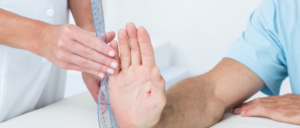
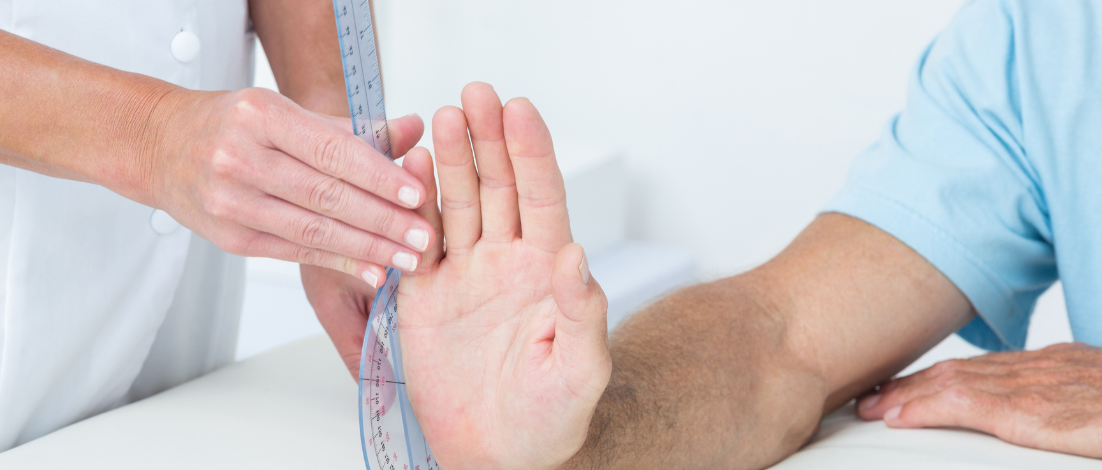
- Range of Motion (ROM): Measuring exactly how far your joint can bend and straighten using a specialized tool called a goniometer.
- Crepitus: A medical term for the grinding, popping, or crunching sensation felt or heard when a joint moves.
- Muscle Metrics: Documented muscle weakness or quadriceps atrophy (the thinning or wasting away of muscle tissue in the thigh from lack of use).
- Gait Anomalies: Observable walking issues, such as an antalgic gait (the medical term for walking with a limp or an altered step to avoid pain).
Comparing Subjective and Objective Findings
To see how these two pieces of medical evidence work together in a real record, it helps to view them side-by-side.
| Subjective Documentation (What You Report) | Objective Documentation (What the Doctor Measures) |
| “My pain is a 7 out of 10 today.” | Knee flexion is limited to 105 degrees. |
| “It hurts terribly whenever I climb stairs.” | A positive McMurray test suggests a tissue issue. |
| “My knee catches and locks up occasionally.” | Visible swelling and effusion are noted around the joint. |
| “I experience severe morning stiffness.” | An MRI shows a meniscus tear or cartilage loss. |

Why Functional Limitations Matter
A medical record needs to show more than just a diagnosis name. For veterans navigating an evaluation, documenting functional limitations is incredibly important. A functional limitation is defined as a specific everyday activity that you can no longer perform normally because of your medical condition.
Under federal guidelines 38 CFR § 4.40 and 38 CFR § 4.45, independent reviewers look closely at how a joint problem interferes with your ability to live and work.
Common examples of functional limits include:
- Severe difficulty walking even short distances.
- Significant trouble climbing stairs safely.
- Needing an assistive device, such as a cane, walker, or knee brace.
- Problems standing for long periods at work or at home.
The Power of Painful Motion
A joint does not have to be completely frozen to show functional loss. If a joint hurts when it moves, that pain is considered a form of functional limitation. If a provider documents that you experience pain during movement, independent reviewers can consider that data during an evaluation.
Better Understanding Range of Motion (ROM)
Range of motion is one of the most important numbers in your knee medical documentation. It measures the full circle of movement your joint can make. To understand if your numbers show a limitation, it helps to know what a normal knee can do.
- Normal Extension: This is how straight you can make your leg. A normal reading is approximately 0° (degrees), meaning the leg is perfectly flat and straight.
- Normal Flexion: This is how far you can bend your knee toward your body. A normal reading is approximately 135° to 150°.
If your medical records show that your knee stops bending at 100° or cannot straighten past 10°, providers use those degrees to track the severity of your condition over time.
Educational Record Organization Services
If you are navigating your benefits pursuit, ensuring your files contain a balance of these tracking methods can feel overwhelming. Trajector Medical provides professional medical evidence consulting. We do not handle claims, file government paperwork, or provide legal representation.
Instead, our services focus strictly on medical evidence education, record organization, and clinical document reviews. The client always remains entirely in charge of their own benefits journey.